Every apothecary keeps one drawer it does not advertise. Ours is labelled Papaver somniferum, the opium poppy, and it is the reason this bar has the name it does. The plant deserves a fuller introduction than a logo allows.
It grows waist-high on a grey-green stem, crowned by a single nodding bud. The bud lifts, splits and opens within a day to four crumpled petals, white through lilac to a deep bruised mauve, each often blotched dark at the base. Then the petals fall and the real spectacle arrives: a smooth blue-green seed capsule, ridged and topped with a little crown, the most recognisable silhouette in the whole apothecary. It is that capsule, not the flower, that you see drawn on our seal.
Sleep, Dreams and the Victorian Cabinet
The old name says everything. Somniferum means sleep-bringing, and for centuries the poppy stood for sleep, forgetting and the soft edge of death: the flower of Morpheus, scattered across tombs and lullabies alike. The Victorians who raised the Bath above our heads kept it close, in tincture, on many a respectable shelf. We mention this as history, not as recommendation. The nineteenth century learned the hard way that a sleep-bringer keeps its own counsel.
Somniferum means sleep-bringing: the flower of Morpheus, scattered across tombs and lullabies alike.
Not every part of the plant is shadowed. The ripe capsule rattles with thousands of slate-blue seeds, the same poppy seeds strewn on a good loaf or crushed into a Central European cake, harmless and faintly nutty. And the scarlet field poppy of remembrance is a cousin entirely, Papaver rhoeas, a different plant with a milder temper. One family, many moods.
Why We Took the Name
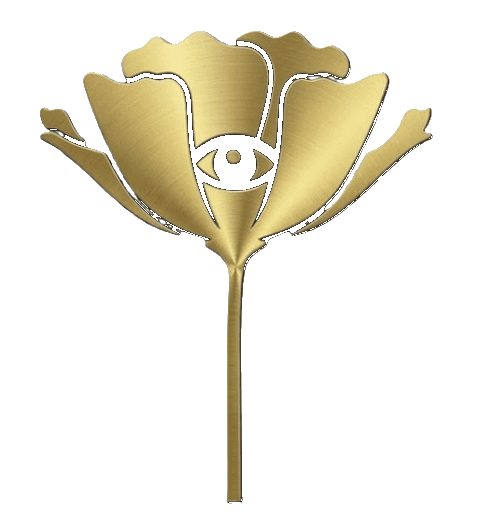
We chose the poppy because it tells the truth about the place. It is lovely and faintly dangerous, built for dusk rather than daylight, and it promises dreams without saying whose. You will find it everywhere down here once you start looking: pressed into the seal, drawn on the menu, worked into the plaster. An all-seeing eye sits at the centre of ours, which feels about right for a flower that has always known more than it lets on.
Look for the capsule on the door. If the eye is open, so are we.